
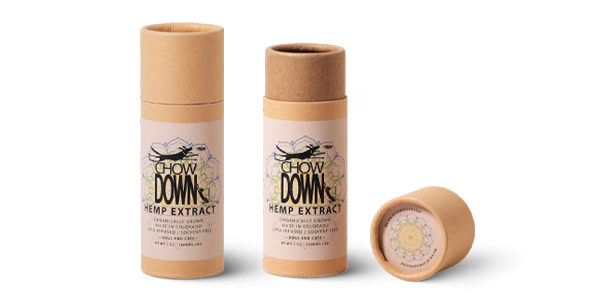
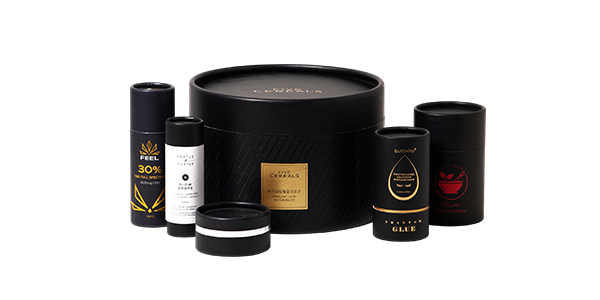
Among all types of gift packaging, Cylindrical Tube Packaging is a preferred choice for many brands to enhance product recognition with its simple and elegant shape and flexible customization space, whether for high-end gift boxes or cultural and creative souvenirs. However, many partners always encounter various structural defects during mass production, which not only affect the appearance and texture but also cause losses of entire batches of goods in storage and transportation. Shengcai has been deeply engaged in the packaging manufacturing field for years, handling proofing and mass production of a huge number of custom cylindrical tube packaging projects. We have seen too many quality problems caused by detail omissions. Today, combined with actual production cases, we will talk about the most common structural defects of this kind of packaging and practical methods to avoid problems from the source.
Many brands only focus on appearance printing when inspecting cylindrical tube packaging for gifts, ignoring the process defects of the structure itself. These small problems are not easy to detect in small-batch proofing, but once entering large-scale production, they will break out intensively. We have sorted out the high-frequency defects in production and after-sales, and clarified the causes and impacts for brands to control in advance when docking production:
| Defect Type | Specific Performance | Core Causes | Actual Impact on Batch Products |
|---|---|---|---|
| Curling Edge Cracks | Hairline cracks appear at the curling edge of the tube mouth, and even edge collapse in severe cases | Unbalanced environmental humidity, insufficient paper toughness, unreasonable curling pressure parameters | Decrease in the qualified rate of mass goods, easy damage to packaging, failure to protect internal products |
| Lid Tolerance Imbalance | Lid is too loose to fall off or too tight to open and close, deformed after repeated use | Insufficient mold precision, excessive size cutting error, no consideration of material thermal expansion and contraction | Affect user experience, reduce the grade of brand products, increase after-sales complaints |
| Interlayer Delamination | Layers of composite paper on the tube body warp, adhesive parts degum and bulge | Mismatched adhesive selection, substandard drying temperature, humid storage environment | Sharp drop in packaging structural strength, failure to meet the load-bearing requirements of high-strength cylindrical tube packaging |
| Tube Oval Deformation | Perfect circular tube becomes oval, lid cannot fit accurately | Uneven rolling tension, extrusion of finished products stacking, inadequate transportation protection | Failure of adaptability of the entire batch of packaging, unable to assemble and use normally |
| Sealing Performance Failure | Substandard moisture-proof and airtight effects, internal products affected with damp and oxidized | Simple sealing process, poor sealing ring adaptability, unaddressed air pressure difference problems | Shorten the shelf life of food and beauty products, failure to implement airtight cylindrical tube packaging customization requirements |
In the process of serving customers, we find that curling edge cracks are the most common problem in autumn and winter. The low temperature and dry environment will quickly reduce the water content of paper materials and increase brittleness. Without stable humidity control in the production workshop, even mature processes will cause batch cracks. The imbalance of lid tolerance is mostly caused by the factory’s neglect of regular mold calibration. Minor wear has limited impact on small-batch production, but after large-scale production, errors will be infinitely amplified.
To meet the production needs of durable cylindrical tube packaging, Shengcai upgraded the whole-process quality control system in 2026, formulating a set of implementable optimization plans from the production environment, material selection to process debugging, to reduce structural defects from the root:
Many brands think that process optimization will increase costs, but on the contrary, good quality control in the early stage can greatly reduce the defective rate and after-sales loss, making the overall production more efficient. After we optimized the processes related to cylindrical tube packaging delamination repair for customers, the mass goods defective rate dropped from 8% to 0.6%, and the cost control effect of long-term cooperation is very significant.
In the process of docking customized production, many brands ask about the process and use of Cylindrical Tube Packaging. We selected the most representative ones and provided answers combined with actual production experience:
Q1: Why is the flatness of hand-curled cylindrical packaging far inferior to machine-curled ones?
Hand curling relies on the operator’s technique and strength, making it difficult to ensure the complete consistency of tension and angle of each curling edge. The accumulation of tiny errors will lead to uneven height. This is why we always adopt high-precision machine curling in large-scale production, which can maximize the process consistency of each custom cylindrical tube packaging.
Q2: Can paper cylindrical packaging achieve stable airtight protection effect?
Pure paper tubes are difficult to achieve absolute airtightness, but with customized processes such as aluminum foil composite layers and elastic sealing rings, high-quality moisture-proof and airtight effects can be achieved, fully meeting the protection needs of beauty and food products. Shengcai can customize exclusive airtight cylindrical tube packaging solutions according to the protection level of products.
Q3: How to prevent the lid of cylindrical packaging from popping off during long-distance transportation?
First, accurately control the fitting tolerance between the lid and the tube body, keeping the gap between 0.1-0.2mm; second, install a buffer sealing pad inside the lid to improve the fitting degree and buffer air pressure changes; finally, optimize the packaging and boxing method, using fixed card slots to avoid shaking and collision during transportation. The combination of multiple measures can basically eliminate such problems.
Q4: When customizing cylindrical tube packaging for gifts, how to balance appearance texture and structural durability?
We can match material selection, using high-gram art paper for the outer layer to ensure printing texture, and thickened cardboard for the inner layer to improve structural strength. At the same time, optimize the curling and bonding processes, not blindly pursuing ultra-thin appearance, and taking into account appearance and practicality. Our design team will provide customized solutions that balance texture and durability according to product positioning.
High-quality Cylindrical Tube Packaging is never a single process replication, but a customized solution combining brand positioning, product use, and transportation scenarios. From proofing and debugging to mass production, from structural design to quality control implementation, Shengcai always takes the actual use scenarios as the core, optimizes tube thickness, sealing process, and lid structure according to the needs of different brands, so that each cylindrical packaging not only has an exquisite appearance but also reliable structural performance.
If you are troubled by structural defects, unstable quality control when customizing cylindrical packaging, or need to create an exclusive high-strength cylindrical tube packaging solution, you can contact us through Shengcai. We will combine years of production experience to provide you with one-stop service from design to production, avoid various structural defects, and make packaging a real bonus for product quality and brand image.
1. Must-Read for Beauty Store Owners: Is Poor Material […]
mid global economic fluctuations, China’s gift bo […]
Packaging Box Die-Cutting Plate Technology: More Than J […]
March 2026, the volume-based pricing rule of internatio […]
Related links:
About us Company News Industry Dynamics Cardboard box Corrugated box Cylindrical box Envelope Gift box Label Paper bag SSL 100% Secure Transactions
