


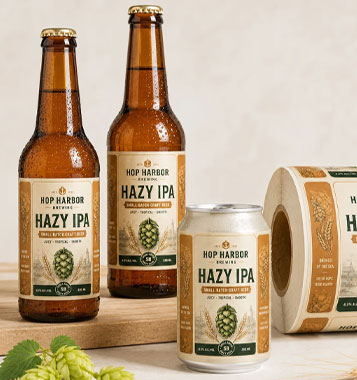
Choosing the right Self-adhesive label materials guarantees stable Glass plastic metal bottle labeling results. Most labeling failures come from mismatched materials, not poor glue quality. Many manufacturers face curling, bubbling and peeling labels during storage and shipping. Shengcai summarizes practical, field-tested solutions to fix common labeling issues for glass, plastic and metal containers.
Container surface energy controls label adhesion stability. Material surface molecular activity varies greatly across glass, plastic and metal. Workers must distinguish High surface energy vs low surface energy adhesives for accurate material matching. Targeted facestock and adhesive pairing eliminates most post-labeling defects.
Glass containers have high surface energy and hold labels firmly right after application. Most glass packaging stores cold sauces, drinks and preserved food. Condensation builds up constantly in low-temperature and high-humidity environments.
Standard adhesives lack strong water resistance. Moisture breaks down adhesive layers over time. Labels gradually lift at the edges or peel off completely after weeks of cold storage.
Plastic containers cause the most frequent labeling errors. HDPE and PP plastics feature low surface energy with inactive surface molecules. Regular adhesives fail to penetrate and bond tightly, so factories widely use Anti-flagging label material for plastic packaging.
Labels look smooth after application but curl during transit or storage. This issue occurs when workers use universal glue instead of specialized adhesives for low-surface-energy plastics.
Metal cans face unique labeling challenges from temperature shifts and surface residues. Metal conducts heat fast. Day and night temperature changes expand and contract adhesive layers repeatedly.
Tiny oil residues remain on can surfaces after production. These residues block adhesive bonding. Curved metal surfaces create rebound tension and cause label bubbling, shifting and curling.
Container, Facestock and Adhesive Matching Chart
This field-verified table supports fast and accurate material selection for mass production:
| Container Type | Best Facestock | Matching Adhesive | Common Issues & Fixes |
|---|---|---|---|
| Food glass jars & glass bottles | Laminated synthetic paper, clear PET film | Moisture-resistant modified acrylic glue | Condensation causes peeling; full lamination and waterproof back glue boost humidity resistance |
| HDPE/PP plastic bottles & plastic pails | Flexible PE film, thin PP synthetic paper | High-tack glue for low surface energy | Long-term storage curling; ultra-thin flexible materials adapt to inert plastic surfaces |
| PET beverage bottles & clear plastic containers | Glossy PET, standard synthetic paper | Medium-tack standard acrylic glue | Curved surface bubbling; optimized die-cut layout releases surface tension |
| Coated metal cans & tin cans | Matte silver PET, oil-resistant laminated paper | Temperature & oil-resistant metal glue | Oil residue and temperature bubbling; pre-clean surfaces and use temperature-stable adhesive |
Curved Surface Label Defect Checklist
Most curved labeling defects stem from unbalanced surface tension. Use this list for quick on-site inspection:
- Narrow-neck bottles and small vials have extreme curvature. Rigid facestocks rebound and curl easily. Flexible films deliver better results.
- Overwide labels on large curved barrels trap air and form bubbles. Control label width to fit container radian.
- Misaligned die-cut directions create uneven stress. Vibration during transit causes partial label peeling.
- Weak long-term adhesive holding power fails in high-temperature shipping environments and triggers label loss.
Reliable Curvatures labeling solutions combine flexible facestock, high-cohesion adhesive and professional die-cut technology. Simple glue upgrades cannot fix complex curved surface problems. Shengcai customizes matching solutions for irregular and curved packaging.
Frequently Asked Questions
These practical answers resolve the most common on-site labeling confusions:
Q1: Why do HDPE bottle labels peel off after 24 hours even with perfect initial adhesion? A1: Mismatched surface energy causes this issue. Universal glue only creates temporary physical attachment on HDPE plastic. Switch to low-surface-energy high-tack adhesive. Run constant temperature and humidity tests before mass production to avoid defects.
Q2: How to stop glass jar labels from peeling in high-humidity warehouses? A2: Use hydrolysis-resistant modified acrylic adhesive with fully laminated facestock. This double protection blocks vapor penetration. It maintains stable adhesion in long-term cold and humid storage conditions.
Q3: Do temperature fluctuations ruin label adhesion on metal cans? A3: Yes. Fast heat transfer on metal stretches and squeezes adhesive layers. Professional temperature-resistant metal glue offsets thermal stress and keeps labels intact during shipping and storage.
No single material formula fits all labeling scenarios. Packaging shape, storage conditions and transit environments change adhesion performance. Shengcai offers free sample testing and custom Curvatures labeling solutions. We cut labeling defect rates and stabilize product appearance quality for every client.