


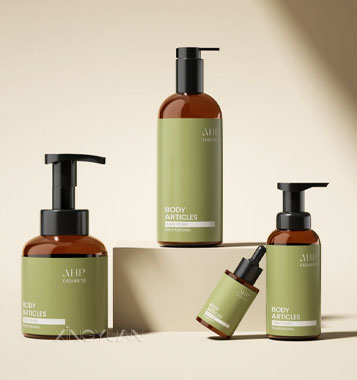
Curved bottle production teams constantly battle frustrating label edge lifting and label flagging defects. Flawless labels fresh off the line curl and peel during storage and transit, ruining product presentation and triggering costly rework. Most technicians only adjust adhesive strength during Curved bottle labeling troubleshooting, ignoring critical root causes. Years of field production at Shengcai prove that unstable label stiffness vs flexibility, poor low surface energy bottle label compatibility, and careless small-diameter labeling processes create nearly all persistent adhesion failures.
Most lifting issues stem from poor label stiffness vs flexibility balance. Rigid PET and thick paper labels hold strong shape memory. They constantly pull back to their flat form after wrapping curved surfaces. Even solid Initial tack cannot fight long-term rebound stress. Bottles narrower than 25mm amplify this tension and make flagging far more frequent.
Bottle substrate quality creates another major failure point. Untreated HDPE and PP bottles belong to the low surface energy bottle label category. Hidden mold release residue creates ultra-smooth surfaces. Adhesives fail to grip tightly, and small temperature shifts trigger widespread edge lifting and flagging.
Most recurring small diameter bottle labeling issues do not require equipment upgrades or major line overhauls. Precise material matching, optimized label overlap design, and standardized pre-labeling checks eliminate almost all edge lifting and flagging. The following practical solutions are fully verified via Shengcai’s mandrel test and mass production trials, ideal for skincare, essential oil, beverage, and soft tube packaging applications.
Curved Bottle Label Material & Adhesive Field Guide
This chart comes from hundreds of real-world mandrel test bending and weathering trials. It eliminates blind sampling and guesswork:
| Bottle Application Scene | Top Facestock Choice | Matching Adhesive | Practical Optimization Tips |
|---|---|---|---|
| Small rigid bottles (<25mm, essential oil, sample vials) | Ultra-thin stretchable PE film, lightweight synthetic paper | High initial tack solvent rubber adhesive | Add 3–5mm label overlap self-locking structure to counteract material rebound and stop edge lifting |
| Squeezable soft tubes (facial cleanser, hand cream) | Bi-directional stretch flexible film | High-elastic emulsion adhesive | Keep label edges away from mold seams to avoid stress concentration and local flagging |
| Untreated HDPE plastic bottles | Ultra-flexible synthetic film | Professional LSE low surface energy adhesive | Apply corona treatment to raise dyne levels above 38 dynes/cm for stronger adhesive bonding |
| Curved glass bottles (serum, wine, beverages) | Thin matte flexible PP film | Permanent hot melt pressure-sensitive adhesive | Limit label width to 50% of bottle circumference to reduce wrapping tension and long-term rebound |
3-Minute Production Line Troubleshooting Checklist
Tiny overlooked details cause most batch labeling defects. Use this checklist for daily inspection:
- Clean bottle surfaces thoroughly to remove dust, oil, and mold release residue
- Test dyne levels per batch to prevent low surface energy bottle label bonding failures
- Replace hard rollers with soft sponge rollers for even curved-surface pressure
- Extend roller dwell time to fully eliminate trapped air under labels
- Trim die-cut burrs and excess adhesive to remove stress concentration points
Common Labeling FAQ
Q1: Why does mandrel memory cause lifting? Do thinner facestocks solve the problem?
Mandrel memory refers to a label’s natural rebound force after bending. Thick and rigid materials create strong reverse tension, which causes poor label stiffness vs flexibility balance. Stronger adhesives only deliver temporary fixes and fail with temperature changes, leading to label flagging. Thinner, stretchable films reduce rebound stress significantly. Shengcai tests multiple thicknesses for each bottle type to lock in the most stable option.
label overlapQ2: Why does work better for curved bottle labeling?
Standard full-size labels rely only on surface adhesion. Continuous material rebound pulls edges upward over time. A small overlapping section creates self-locking tension. This internal counterforce eliminates curling stress perfectly. This low-cost tweak fixes recurring label edge lifting on narrow curved containers without equipment upgrades.
Q3: Do corona-treated HDPE bottles still have labeling issues?
Corona treatment boosts bottle surface energy effectively, yet the activation effect fades with long storage. Old treated bottles still produce low surface energy bottle label failures. Complete labeling within 48 hours after treatment and use dedicated LSE adhesive to maintain stable bonding.
Curved bottle Label lifting and flagging are avoidable with correct material, adhesive, and process matching. Shengcai provides professional custom label solutions and free mandrel test verification. We fix persistent labeling defects and help production teams cut unnecessary rework costs.