
As festivals approach, many brands look for suitable gift box packaging manufacturers. A gift box with both texture and design can often make products stand out among numerous competitors. However, facing a wide variety of customization processes, many people feel confused – which processes are suitable for their needs? What are the differences in processes between different manufacturers? Today, we will talk about the core customization processes of gift box packaging manufacturers and answer some common questions.
In fact, the process selection of gift box packaging manufacturers essentially depends on product characteristics, budget and usage scenarios. Printing, as the “face project” of gift boxes, is the first link to determine. Offset printing is like putting a delicate coat with uniform colors on the gift box. It has high cost performance in mass production, with color reproduction reaching more than 95%, suitable for cosmetics, food and other products that need a unified visual image; digital printing is more like a “flexible customizer”, which can deliver small-batch orders quickly with bright colors, but the cost is 20%-30% higher than offset printing, suitable for new product samples or limited-edition products; screen printing has the advantage of strong adaptability, which can be used for paper, cloth or wooden gift boxes. The ink is so thick that you can feel the sense of hierarchy, but the precision is slightly inferior to offset printing, more suitable for simple and atmospheric logos or patterns.
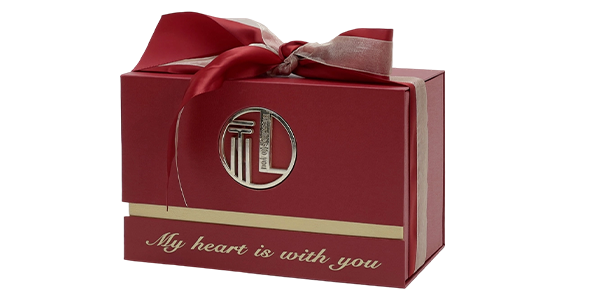
After printing, gift box packaging manufacturers usually add a “bonus item” – surface treatment. Laminating is the most commonly used. Matte film has a high-end matte texture, while glossy film looks bright and dazzling. Both can improve the water resistance and wear resistance of the gift box, making it withstand slight collisions during transportation; UV coating is like “highlighting” local areas of the gift box. After curing by ultraviolet light, the bright and smooth effect can make key patterns stand out instantly, and holographic UV can present dreamy light and shadow changes; hot stamping (gold or silver) is synonymous with luxury. The heated metal foil is embossed on the paper, glowing with delicate metallic luster under the light, which can instantly enhance the grade of both holiday gift boxes and high-end gifts; embossing or debossing process focuses on touch. The texture pressed by the mold can be felt when the fingertips slide over, making the gift box more memorable.
There are also some special processes that can make gift boxes more designed. Hollowing out is like opening a “viewing window” for the gift box. Various shapes are cut through die-cutting technology, which can not only display internal products but also increase interactivity; embossing process is similar to UV coating, but focuses more on three-dimensional effect. It does not need additional coloring, and can highlight patterns or text only through the protrusion of paper; sandblasting process goes the opposite way. The local rough treatment forms a matte effect, contrasting with the smooth surface, low-key and unique.
Structural design is also crucial. The nesting design of gift box packaging manufacturers will match the inner lining or partition in the gift box to firmly fix the product and avoid shaking and damage during transportation; the closing method of magnetic buckle or ribbon is not only convenient to open and close but also can create a sense of ritual, making the moment of opening the gift box more elegant; the foldable structure considers practicality. Folding and storing during transportation can save a lot of space and reduce logistics costs, especially suitable for merchants who need bulk stock. For decoration, ribbons and bows are classic choices with various colors that can echo the product theme; labels or tags can supplement product information and improve brand recognition.
To help you quickly select the right process, here is a practical comparison table:
| Process Type | Core Advantages | Cost Level | Application Scenarios |
|---|---|---|---|
| Offset Printing | High color reproduction, cost-effective for mass production | Medium | Mass-produced standardized gift boxes for cosmetics, food, etc. |
| Digital Printing | Flexible for small batches, fast delivery | High | New product samples, limited-edition custom gift boxes |
| Screen Printing | Compatible with multiple materials, textured ink | Medium-High | Cloth, wooden gift boxes and simple logo printing |
| Laminating (Matte/Glossy) | Water-resistant, wear-resistant, improved texture | Low | Various gift boxes requiring long-term storage or transportation |
| Hot Stamping (Gold/Silver) | Luxurious, visually striking | High | High-end gifts, holiday-limited gift boxes |
| Hollowing Out | Strong design sense, product display | Medium | Gift boxes for cosmetics, jewelry that need to highlight the interior |
| Foldable Structure | Saves logistics space, reduces costs | Low | Gift boxes for bulk stock and long-distance transportation |
When choosing gift box packaging manufacturers, in addition to focusing on processes, we should also look at the manufacturer’s design capabilities and production cycles. A good custom gift box is not only a “protective shell” for products but also a “spokesperson” for the brand. You may think that process selection is cumbersome, but as long as you clarify the product positioning and budget, and fully communicate with the manufacturer, you can create a beautiful and practical gift box, making the product more competitive in the market.
The moment you open a delivery box, a cosmetic package […]
Many consumers have had the experience: a carefully sel […]
1. Must-Read for Beauty Store Owners: Is Poor Material […]
In the gift consumption scenario, packaging is no longe […]
Related links:
About us Company News Industry Dynamics Cardboard box Corrugated box Cylindrical box Envelope Gift box Label Paper bag SSL 100% Secure Transactions
