


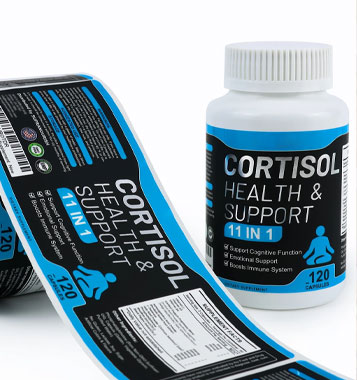
Frosted packaging inside cold storage, long-term sub-zero storage, and repeated freeze-thaw cycles constantly bring labeling troubles to operators. Ordinary self-adhesive stickers lose adhesion and curl easily under low temperatures. Lost printed information disturbs goods circulation and traceability management. Reliable Cold Chain Packaging Labels form the foundation of complete traceability throughout cold chain logistics. With years of experience in custom self-adhesive label manufacturing, Shengcai has accumulated abundant practical cases from low-temperature warehousing and cold distribution scenarios. Based on on-site application feedback, we sort out core suggestions about material selection, adhesive matching and labeling operations, helping you avoid common procurement pitfalls.
Root Causes of Regular Label Failure in Low-Temperature Conditions
Many people assume any low-temperature resistant label works for cold chain scenarios, and this misunderstanding leads to frequent application failures. Challenges brought by cold environments go beyond sub-zero temperatures. Frost layers, humidity fluctuation and inconsistent thermal shrinkage gradually destroy label bonding structures.
Adhesives for standard stickers turn glassy and lose flexibility below 0°C. Different shrinkage rates between packaging substrates and label facestock create continuous peeling stress, starting with curled label edges. When thin frost covers packaging surfaces, ordinary glue cannot penetrate crystal layers and only attaches loosely on frost, resulting in complete label detachment quickly. For stable identification performance, Frozen Food Packaging Labels and medical low-temperature markers require tailored adhesive and facestock combinations.
Core Performance Specification Table of Shengcai Cold Chain Labels
| Test Item | Standard Parameter Range | Practical Application Notes |
|---|---|---|
| Minimum Application Temperature | -15℃ ~ +5℃ | Supports direct labeling on frosted HDPE and PP containers inside cold storage, no pre-heating required |
| Continuous Service Temperature | -40℃ ~ +80℃ | Suitable for general cold chain; customized ultra-low-temperature versions withstand -80℃ working conditions |
| Main Adhesive Types | Deep-cold modified acrylic glue, high-tack cold-resistant rubber glue | Rubber-based glue penetrates thin frost layers; acrylic glue fits long-term static frozen storage |
| Recommended Facestock | PP synthetic paper, laminated PET, metallized synthetic film | Resist condensation erosion, avoid whitening and tearing during freeze-thaw cycles, protect printed graphics |
Practical Label Solutions for Two Mainstream Application Scenarios
Fresh Frozen Goods Storage – Labeling on Frosted Packaging
Frozen food cartons and fresh produce containers easily gather tiny frost crystals inside cold storage, which is the top cause of label falling off. Ordinary labels only maintain stable adhesion on dry surfaces at room temperature; frost will drastically reduce their bonding performance.
Shengcai’s cold-resistant adhesive delivers strong instant tack. It penetrates micro frost layers and allows direct contact between adhesive and packaging substrates. Labels stay flat without bubbling or shifting even with continuous temperature fluctuations in warehouses.
Medical Reagent Cold Chain – cryogenic labeling for Repeated Freeze-Thaw Cycles
Biological reagents, blood bags and testing samples travel through complex logistics chains. Goods undergo deep freezing, outbound transportation, temperature recovery and secondary refrigeration. Constant shifts in temperature and humidity create high requirements for labels, adhesives and packaging compatibility.
Labels must remain attached, while barcodes and printed text stay readable for a long period. Shengcai adopts medical-compliant cryogenic acrylic glue matched with dense non-porous PET facestock to block condensation penetration and satisfy long-term sample traceability filing standards.
Frequently Overlooked Details When Selecting Cold Chain Labels
- Never judge label performance merely by minimum temperature resistance. Always check the official minimum application temperature; these two indicators cannot replace each other
- For goods experiencing frequent temperature alternations, avoid plain coated paper. Synthetic facestock delivers superior weather resistance
- If scanning traceability is required, confirm printing technology. Thermal transfer printing with lamination prevents blurred graphics
- Packaging materials include plastic, aluminum foil and composite films. Different substrates need matched adhesive formulas; no universal label fits all surfaces
Cold Chain Labels FAQ
Q1: Labels applied at room temperature curl heavily around edges after storage at -20℃ overnight. What triggers this problem?
Mismatched thermal shrinkage coefficients between packaging substrates and regular label facestock, together with the loss of flexibility of standard adhesives under low temperatures, generate continuous peeling force. Switching to matched deep-cold facestock and cryogenic adhesives effectively improves this situation.
Q2: All labeling work needs to be completed inside a cold storage at -10℃. Which self-adhesive products should be chosen?
Choose cryogenic labels rated for minimum application temperature of -15℃ or lower. Ordinary room-temperature adhesives cure rapidly in cold environments. They fail to fully wet packaging surfaces and fall off shortly after application.
Q3: Cold chain labels stay exposed to condensation water for a long time. Is there a solution to protect printed content from moisture damage?
Select laminated PP synthetic paper or PET facestock with resin ribbon thermal transfer printing. When manufacturing customized Cold Chain Packaging Labels, Shengcai can add an extra waterproof top film to shield printed layers from condensation and frost.
Custom Cold Chain Label Support from Shengcai
Describing requirements simply as “freezer-proof stickers” rarely brings suitable solutions, since facestock, adhesive and printing craft must work in coordination.
As a direct manufacturer of self-adhesive labels, Shengcai keeps various cold-resistant adhesives and synthetic substrates in stock. We adjust formulas for frozen food, biological samples and low-temperature warehousing scenarios. Custom slitting, variable QR codes and traceability code printing are available. If you have difficulty confirming suitable materials, visit our official website to submit inquiries and request samples. Conduct low-temperature adhesion tests in your actual warehouse environment before bulk orders.