
Tote bags are no longer just tools for “carrying things”. Tote bags in different scenarios have vastly different requirements from design to material. Ordinary tote bags focus on practicality and functionality, while luxury tote bags, as an extension of high-end products, bear more brand value, user identity symbolism and scenario adaptability—which is why they require completely different design logics.
The design focus of ordinary tote bags in different scenarios is completely centered on the “purpose of use”, and we can clearly see the differences through the table:
| Type of Tote Bag | Core Usage Requirement | Design Focus |
|---|---|---|
| Gift Shop Tote Bag | Enhance the delicacy of gifts and convey intentions | Harmonious color matching, light and thin materials (such as matte paper, ribbon decoration), no extra logos |
| Store Tote Bag | Facilitate customers to carry products and promote the brand | Durable materials (such as thickened kraft paper, PP material), clear brand logo printed on the front, tear-resistant handles |
| Grocery Store Tote Bag | Low-cost packaging for small goods, meeting basic storage needs | Economical materials (such as ordinary thin plastic bags, simple kraft paper), flexible capacity, no additional design costs |
Compared with the “function-oriented” ordinary tote bags, “luxury tote bags” need to balance practicality, brand recognition and scenario adaptability. The following three core points are indispensable:
Users of “luxury tote bags” are highly sensitive to quality. The material must not only be “good” but also conform to the current environmental protection trend. According to 2025 market data, high-end brands prefer materials such as recycled vegetable-tanned leather, degradable matte laminated paper, and food-grade eco-friendly ink—these materials not only have a delicate touch (such as the softness of leather tote bags and the stiffness of paper tote bags) but also enhance the brand image through “environmental attributes”, avoiding the cheap feeling brought by ordinary materials (such as low-cost plastic and ordinary cardboard).
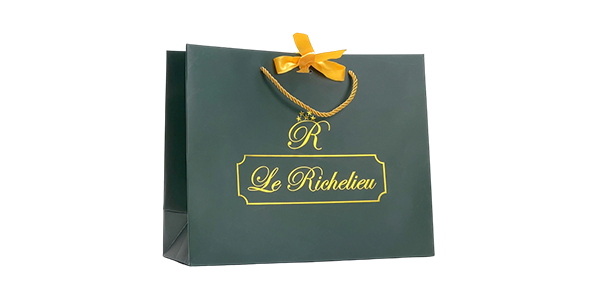
The brand logo of luxury tote bags is not just “printed on”; it needs to be the “visual focus”. For example, Dior’s tote bags use gold or silver stamping for the logo, paired with a solid-color background, which is neither complicated nor highly recognizable; Hermès’ tote bags integrate the logo with the bag body through the matching of font spacing and material texture. Even without mentioning the “brand name”, consumers can recognize it at a glance. Two misunderstandings need to be avoided here: one is that the logo is too large and abrupt, and the other is that there are too many decorative elements to cover the brand logo—after all, the “show-off attribute” of “luxury tote bags” is essentially the natural transmission of brand value.
The design of “luxury tote bags” needs to fit the user’s usage scenarios, such as:
In addition to texture issues, the more important reason is the “environmental trend”. According to a 2025 global high-end consumer market survey, 78% of high-income consumers will “prioritize products and packaging made of environmentally friendly materials”. Plastic materials not only do not conform to the high-end positioning of “luxury goods” but may also reduce users’ favorability towards the brand.
On the contrary. Ordinary tote bags may need to rely on complex patterns to attract attention, but the core of “luxury tote bags” is “low-key luxury”—simple lines, high-end colors, and delicate materials can better reflect the brand’s aesthetic taste and meet the needs of high-income users for “no publicity but high recognition”.
As Shengcai Paper Packaging, which focuses on custom gift boxes, we deeply understand that “packaging is the second face of a brand”. Whether it is the matching design of luxury tote bags or the customization of gift boxes, the core is to “convey brand value through packaging”. If you need to match exclusive packaging for high-end products or want to know more about packaging design trends, welcome to follow us to get the latest industry trends and practical knowledge.
As Foshan Shengcai Paper Packaging with more than twent […]
In 2026, China’s packaging manufacturing industry conti […]
Compared to traditional cutting methods, V-groove scori […]
1. A Mall Question: Why Are Gift Box Colors Softer Than […]
Related links:
About us Company News Industry Dynamics Cardboard box Corrugated box Cylindrical box Envelope Gift box Label Paper bag SSL 100% Secure Transactions
