
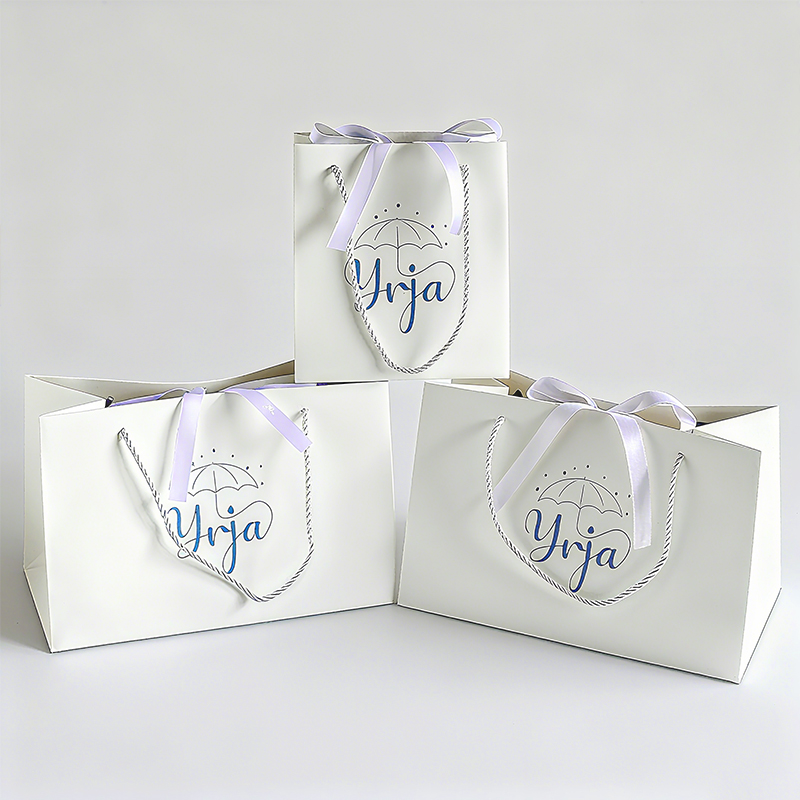
Paper Bags are a staple in retail, food service, and gifting—especially flat-packed paper bagsflat-packed paper bags, which offer unmatched space efficiency for bulk orders. In 2026, with global supply chains stabilizing but logistics costs still fluctuating, choosing between air freight and sea freight for your custom printed paper bags custom printed paper bags or eco-friendly flat-packed paper bags eco-friendly flat-packed paper bags can feel overwhelming. Shengcai, a leading manufacturer of paper bags and packaging solutions, breaks down the latest 2026 logistics trends, hidden costs, and scenario-specific strategies to help you make the smartest choice for your business.
Gone are the days of one-size-fits-all shipping. For paper bags , which are lightweight but volume-sensitive, the right freight method depends on your order size, delivery timeline, budget, and even sustainability goals. Let’s dive into the details—from transit times to packaging tweaks—that will keep your flat-packed paper bags moving efficiently and affordably in 2026.
2026 has brought subtle but impactful changes to global logistics: air freight rates have stabilized after 2025’s volatility, while sea freight has seen improved transit times thanks to reduced port congestion in major hubs (e.g., Los Angeles, Rotterdam, Shanghai). Below is a detailed comparison tailored specifically to flat-packed paper bags,custom paper bags, and eco-friendly paper bags—all of which have unique shipping needs due to their low weight-to-volume ratio.
| Logistics Metric | Air Freight | Sea Freight (FCL – Full Container Load) | Sea Freight (LCL – Less Than Container Load) | Best for Paper Bag Types |
|---|---|---|---|---|
| Door-to-Door Transit Time | 4–7 days (major routes: US-EU, Asia-US) | 22–32 days (US-EU), 28–38 days (Asia-US) | 32–45 days (US-EU), 38–50 days (Asia-US) | Air: Urgent custom orders; Sea: Bulk standard/eco-friendly bags |
| Minimum Shipment Requirement | No strict minimum (can ship as few as 500 flat-packed bags) | 20ft container (holds ~100,000 standard flat-packed bags) or 40ft container (~220,000) | 1 pallet minimum (holds ~5,000–8,000 flat-packed bags) | Air: Small-batch custom bags; FCL: Large bulk orders; LCL: Medium batches |
| Volume Sensitivity & Cost Logic | High—charged by dimensional weight (bulky but light bags cost more) | Low—cost per unit drops with larger orders; fixed container fee | Medium—shared container space; cost per unit higher than FCL but lower than air | Air: Small custom orders; Sea: All bulk paper bag types |
| Carbon Footprint (per 1,000 bags) | High (approx. 120kg CO₂ equivalent) | Low (approx. 15kg CO₂ equivalent for FCL; 18kg for LCL) | Low (approx. 18kg CO₂ equivalent) | Eco-friendly paper bags: Sea freight aligns with sustainability goals |
| Risk of Damage/Loss | Low (faster transit, less handling) | Medium (longer transit, more handling; moisture risk) | Medium-High (shared handling, more transfers) | Delicate custom paper bags: Air freight reduces damage risk |
One thing to note—these numbers aren’t set in stone. For example, if you’re shipping custom printed flat-packed paper bags with delicate finishes (like embossing or foil stamping), air freight might be worth the extra cost to avoid damage during long sea transit. On the flip side, eco-friendly paper bags often ship in larger bulk, making sea freight the more cost-effective and sustainable choice.
Every business has unique needs, and your shipping strategy for paper bags should reflect that. We’ve compiled three common scenarios (plus pro tips from Shengcai’s logistics team) to help you navigate 2026’s logistics landscape.
Peak seasons wait for no one—and neither do your customers. If you’re facing a last-minute restock of paper bags with just 2–3 weeks of lead time, sea freight is out of the question. Even LCL, with its 32+ day transit, would leave you short-handed during the busiest sales periods.
Pro Tip from Shengcai: Opt for “express air freight” (4–5 days) for custom paper bags needed for limited-time promotions. We can optimize packaging to reduce dimensional weight—for example, compressing flat-packed paper bags slightly (without damaging them) to cut air freight costs by 10–15%.
Real-World Example: A retail client of ours needed 10,000 custom printed paper bags for a Black Friday launch, with just 10 days to spare. We coordinated air freight from our facility to their US warehouse, and the bags arrived in 5 days—just in time for the sale. The speed paid off: they sold out of their promotional items, and the bags received positive feedback from customers.
If you have predictable demand for paper bags —say, a grocery store that orders 50,000 eco-friendly flat-packed paper bags every quarter—patience is your biggest asset. Quarterly bulk orders let you lock in lower manufacturing costs with Shengcai, and sea freight (FCL) amplifies those savings.
Pro Tip from Shengcai: Plan your orders 2–3 months in advance to avoid rush fees. We can also help you schedule shipments to arrive just as your current inventory runs low, so you never have to worry about stockouts or overstocking. For eco-friendly paper bags, sea freight’s lower carbon footprint also aligns with many brands’ sustainability goals—a win-win.
Why FCL Over LCL? For bulk paper bags, FCL is faster (22–32 days vs. 32–45 days for LCL) and cheaper per unit. It also reduces the risk of damage, as your bags won’t be transferred between multiple containers.
What if you need paper bags quickly but don’t want to pay for full air freight? A split shipment—combining air and sea freight—is the perfect middle ground. This strategy is ideal for businesses launching new products, testing market demand, or navigating uncertain sales forecasts.
How It Works: Ship 20% of your paper bags via air to cover immediate sales or launch needs, and 80% via sea to restock long-term. This way, you avoid stockouts while keeping overall shipping costs low.
Pro Tip from Shengcai: For custom flat-packed paper bags, we can prioritize the 20% air freight portion in our production schedule, ensuring it’s ready to ship within 2–3 days. The remaining 80% can be produced and shipped via FCL, arriving just as your air freight stock starts to run low.
We get it—shipping paper bags comes with a lot of questions. Below are the most common ones we hear from our clients, along with straightforward answers to help you avoid mistakes and save money.
Great question—dimensional weight (also called “dim weight”) is the biggest hidden cost for flat-packed paper bags in air freight. Carriers calculate it using the formula: (Length × Width × Height) ÷ 5000 (measured in centimeters). Since flat-packed paper bags are bulky but light, dim weight almost always determines the air freight cost.
At Shengcai, we help reduce dim weight by optimizing packaging: we use thinner (but durable) cartons, compress flat-packed paper bags evenly (without creasing), and avoid unnecessary packaging materials. This can cut your dim weight by 10–20%, translating to real savings on air freight.
It depends on your order size and timeline. If you’re shipping 5,000–20,000 paper bags (too small for FCL but too large for air freight), LCL is a good option. But keep in mind: LCL is slower (32–50 days) and more expensive per unit than FCL. If you can wait a bit longer and combine orders (e.g., add custom paper bags for a future promotion), FCL might be cheaper in the long run.
Pro Tip: For eco-friendly paper bags, LCL is still a solid choice if you can’t fill a full container—just make sure to add extra packaging (more on that below) to protect against moisture during transit.
Moisture is the number one enemy of paper bags during sea freight—humidity in shipping containers can cause bags to soften, warp, or even mold. At Shengcai, we take three key steps to protect your shipment:
We’ve tested these methods with hundreds of sea freight shipments, and they’ve reduced moisture damage to less than 1%—a huge improvement over industry averages.
Absolutely—hidden costs can eat into your budget if you’re not careful. For air freight, watch for “fuel surcharges” (which can add 5–10% to your bill) and “handling fees” for small batches. For sea freight, be aware of “port fees,” “customs clearance fees,” and “storage fees” if your shipment is delayed.
Shengcai helps you avoid these surprises by providing a full, transparent quote upfront—no hidden fees, no last-minute charges. We also coordinate with trusted logistics partners to minimize delays and extra costs.
Choosing between air and sea freight for paper bags isn’t about picking the “cheapest” or “fastest” option—it’s about picking the option that fits your business goals. Air freight is your lifeline for urgent orders and delicate custom paper bags, while sea freight is the workhorse for bulk, cost-effective shipments of eco-friendly flat-packed paper bags.
At Shengcai, we don’t just manufacture high-quality paper bags—we’re your partner in every step of the process, from design and production to shipping and delivery. Whether you need a last-minute air freight shipment for Black Friday or a quarterly FCL order of eco-friendly paper bags, we’ll tailor a solution that meets your timeline, budget, and quality standards.
2026 is all about efficiency and flexibility—let us help you ship your paper bags smarter. Contact us today to discuss your order and get a personalized logistics plan.
1. Raw Material Control: The First Quality Check for Gi […]
In the gift packaging market of 2026, Rigid Boxes remai […]
When businesses seek packaging solutions—whether for gi […]
The moment you open a delivery box, a cosmetic package […]
Related links:
About us Company News Industry Dynamics Cardboard box Corrugated box Cylindrical box Envelope Gift box Label Paper bag SSL 100% Secure Transactions
