
When brands select packaging for their core products, the biggest dilemma is often not “which style to choose” but “which packaging can uphold the brand’s tone, stay within budget, and avoid issues during transportation”? The choice between Rigid Box and Folding Carton is essentially a balancing act of brand value, cost control, and user experience — choose correctly, and packaging becomes an invisible bonus; choose incorrectly, and you might quietly lose customers. Many high-end brands have stumbled here: clearly, their product quality is top-notch, but the thin texture of Folding Carton makes consumers feel “not worth the price,” and frequent damage during transportation leads to unnecessary losses. The emergence of Rigid Box precisely addresses these core pain points.
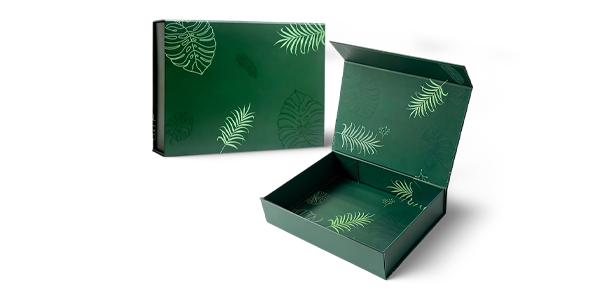
The most core advantage of Rigid Box lies in its ability to make brand texture “visible.” Made of thick rigid cardboard as the base material, the outer layer can be paired with specialty paper, hot stamping, UV, embossing, and other processes. The heavy feel in the hand and the sense of ritual when unboxing directly convey the product’s high-end positioning. Just like the custom rigid box for luxury products favored by high-end beauty brands, even if it only contains a lipstick, the magnetic buckle design when opening and the flannel texture on the inner wall can instantly make consumers feel “worth every penny” — that’s why such brands almost uniformly abandon Folding Carton. In contrast, although Folding Carton is lightweight and easy to store, its thin material always seems “inadequate” in high-end scenarios. Some brands even report that the repurchase rate of limited-edition products packaged in Folding Carton is nearly 10% lower than those in Rigid Box — consumer recognition often lies in these details.
In fact, the differences between the two are better understood with a detailed calculation:
| Comparison Dimensions | Rigid Box | Folding Carton |
|---|---|---|
| Material & Texture | Thick rigid cardboard + diverse craftsmanship, strong sense of ritual, boosting brand premium | Ordinary cardboard/corrugated paper, thin texture, hard to support high-end positioning |
| Transportation Damage Rate | Only 0.3%, effectively protecting high-value products | Up to 5%, high risk of damage for fragile items |
| Customization Flexibility | Supports complex designs such as heaven and earth cover, magnetic buckle, window, adapting to luxury rigid box customization service | Single structure, limited craftsmanship, hard to meet personalized needs |
| Cost-Effectiveness | 10%-15% higher one-time purchase price, but brand premium covers costs and reduces return losses | Low unit price, but high hidden costs from damage and brand reputation loss |
| Environmental Performance | Uses FSC-certified recycled cardboard with a 92% recovery rate, complying with sustainable rigid box manufacturing standards | Easy to recycle, but only 15% reuse rate, limited environmental advantages |
To be honest, brands have many unspoken concerns when choosing packaging — based on actual service cases, we’ve sorted out the most frequently asked questions, which may help you make a decision:
Q: Will customizing Rigid Box exceed the budget? After all, the unit price seems much higher than Folding Carton?
A: In fact, the rigid box vs folding carton cost comparison shouldn’t just look at the surface. For example, a high-end beauty set priced at 500 yuan can be raised to 599 yuan with Rigid Box packaging — consumers are fully willing to pay for the texture, and this premium has long covered the packaging price difference. More importantly, the low damage rate of Rigid Box can avoid return losses caused by product damage. A jewelry brand calculated that after switching to Rigid Box, monthly losses due to packaging damage decreased by nearly 3,000 yuan — in the long run, it’s actually more cost-effective.
Q: We want to adopt premium rigid box packaging solutions, but we’re worried about failing environmental compliance and being criticized by consumers. What should we do?
A: This is one of the core advantages of current Rigid Box design. Today’s Rigid Box is no longer synonymous with “unenvironmentally friendly.” The recycled rigid cardboard we use not only meets national environmental standards but also holds FSC certification. Many brands have seen an 8%-12% increase in brand favorability after adopting this sustainable rigid box manufacturing solution. Moreover, Rigid Box has a high reuse rate — many consumers repurpose it as a storage box, which not only reduces waste but also keeps the brand logo in users’ lives for a long time, equivalent to free publicity.
There’s another easily overlooked point: the customization freedom of Rigid Box helps brands solve the pain point of “differentiated competition.” For example, we once customized a Rigid Box for a high-end fragrance, embedding a micro fragrance slow-release tablet inside. The moment the lid is opened, consumers can smell the same scent as the product — this immersive experience makes the product stand out among competitors. Due to material limitations, Folding Carton can hardly achieve such creative designs — in an era of serious product homogenization, such detailed differences often determine consumers’ choices.
Choosing packaging is never about “choosing the expensive one,” but “choosing the right one.” If your product focuses on high-end, limited-edition, or high-value positioning, the texture, low damage rate, and environmental attributes of Rigid Box can accurately address the core issues of “mismatched brand tone, high transportation losses, and low consumer recognition.” High-quality luxury rigid box customization service can also adjust the structural design according to product characteristics — for example, adding buffer layers for fragile items or designing lightweight Rigid Box for portability, making packaging truly adapt to the product rather than just “containing it.” After all, good packaging is never a supporting role, but an important partner that helps brands speak and assists consumers in making decisions — and Rigid Box clearly understands this need better.
In the era of heightened environmental awareness, consu […]
IntroductionAs society evolves, the art of gifting has […]
When shopping, it’s easy to notice that products of the […]
If you’re looking to make a custom gift box that people […]
Related links:
About us Company News Industry Dynamics Cardboard box Corrugated box Cylindrical box Envelope Gift box Label Paper bag SSL 100% Secure Transactions
